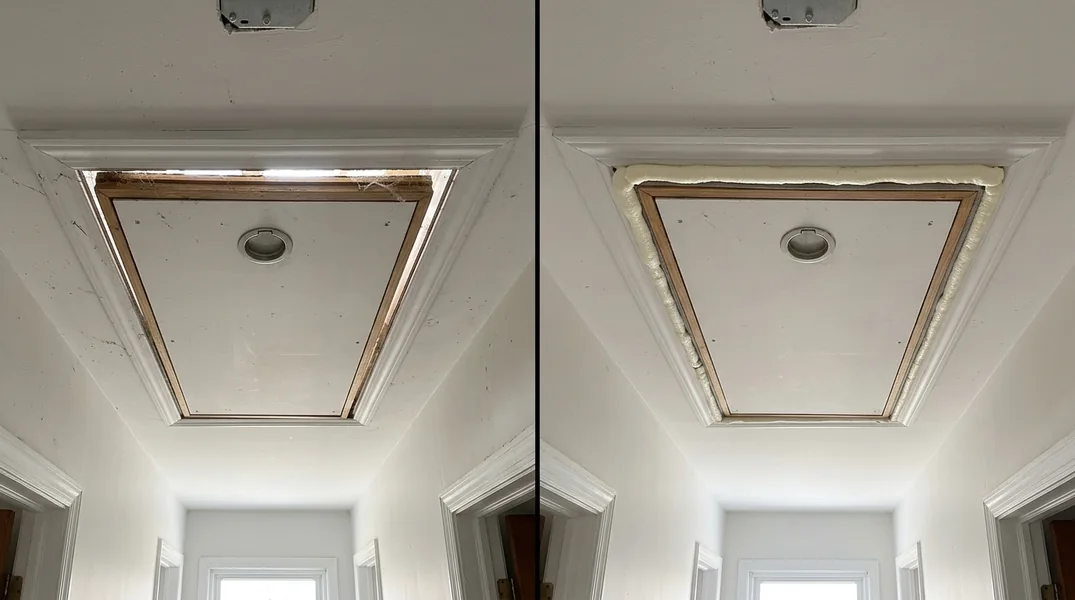
Understanding Spray Foam Attic Insulation: The Basics
When it comes to keeping your home comfortable and energy-efficient in Pueblo, few solutions rival the performance of Attic Spray Foam Insulation. Unlike traditional fiberglass batts or blown-in cellulose, spray foam expands to fill every crack, crevice, and gap in your attic space, creating an air-tight seal that dramatically reduces heat loss and air infiltration.
Spray foam insulation works by being applied as a liquid that quickly hardens into a solid foam. This expansion process is what makes it so effective at sealing irregular spaces and creating a continuous thermal barrier. However, not all spray foam is created equal. The two primary types, open cell and closed cell, offer distinctly different performance characteristics, benefits, and price points. Understanding these differences is crucial for homeowners in Pueblo who want to make an informed decision about their attic insulation needs.
What is Open Cell Spray Foam Insulation?
Open Cell Spray Foam Insulation is a lighter-density foam product that contains cells which are not completely encapsulated. This structure allows air and moisture to pass through the foam, which means it is permeable. Open cell foam typically has an R-value of approximately 3.5 to 3.8 per inch, making it a good insulator, though not as powerful as its closed cell counterpart. The foam is softer and more flexible than closed cell, which can make it easier to install around irregular shapes and obstacles in your attic.
One of the primary advantages of open cell foam is its cost-effectiveness. It is generally less expensive than closed cell spray foam, making it an attractive option for homeowners working within a tighter budget. Additionally, open cell foam is often considered more environmentally friendly, as many formulations use water as a blowing agent rather than hydrofluorocarbons. Because the foam is permeable, it also allows your attic to breathe, which can be beneficial in certain climates and construction scenarios. However, the permeability also means it offers less of a moisture barrier, so it may not be ideal in areas prone to high humidity or where a sealed attic insulation solution is critical.
What is Closed Cell Spray Foam Insulation?
Closed Cell Spray Foam Insulation is a denser foam product where the cells are completely enclosed and packed tightly together. This structure creates a foam that is impermeable to both air and moisture, providing superior air sealing and moisture resistance. Closed cell foam typically has an R-value of 6.0 to 7.0 per inch, roughly double that of open cell foam. This higher R-value means you need less thickness to achieve the same insulation performance, which can be advantageous in attics with limited space.
The benefits of closed cell foam extend beyond just superior insulation. Because it creates a complete air and moisture barrier, closed cell foam is ideal for creating an unvented attic spray foam solution. This means your attic can be conditioned as part of your home's interior, potentially improving comfort and reducing energy costs. Closed cell foam also provides structural reinforcement to your roof deck and can improve the overall rigidity of your attic space. The trade-off is that closed cell foam is more expensive than open cell foam, and it requires more specialized equipment and expertise to install properly. However, for many homeowners seeking maximum performance and long-term energy savings, the investment is well worth it.
Comparing Performance: R-Value, Air Sealing, and Moisture Control
When choosing between open cell and closed cell spray foam for your attic, performance metrics matter significantly. The most commonly discussed metric is R-value, which measures thermal resistance. Closed cell foam's superior R-value of 6.0 to 7.0 per inch means that a 4-inch application provides roughly R-24 to R-28 of insulation. In contrast, open cell foam at 3.5 to 3.8 per inch requires approximately 6 to 7 inches to achieve the same R-value. For attics with height restrictions, this difference can be substantial.
Beyond R-value, air sealing capability is where spray foam truly excels compared to traditional insulation methods. Both open and closed cell foam expand to fill gaps and create a continuous barrier, but closed cell foam's impermeability gives it the edge in creating a truly air-tight seal. This is especially important in Colorado's climate, where temperature swings between seasons can stress your home's envelope. Closed cell foam also provides superior moisture control, which is critical if your attic will become part of your conditioned space. Open cell foam, while still providing good air sealing, allows some moisture vapor transmission, which is acceptable in vented attic configurations but may not be ideal for an unvented attic design.
Attic Spray Foam Insulation Cost in Pueblo: What to Budget
Understanding the financial investment required for spray foam insulation is essential for any homeowner planning an attic upgrade. Open cell spray foam typically costs between 40 to 60 cents per board foot, making it the more budget-friendly option for homeowners looking to improve their insulation without a major expense. For a typical 1,500 square foot attic with an average depth of 5 to 6 inches, you might expect to spend between 3,000 to 5,000 dollars for open cell foam installation.
Closed cell spray foam, while more expensive at 1.00 to 1.50 dollars per board foot, often delivers better long-term value through superior energy efficiency and durability. A similar attic space with 4 inches of closed cell foam might cost between 5,000 to 7,000 dollars. However, the higher upfront cost often translates to greater energy savings over time, potentially recouping the investment through reduced heating and cooling costs. To get an accurate picture of what your specific project will cost, we recommend reaching out to Pueblo Spray Foam Insulation for a free estimate. Our team can assess your attic's unique characteristics and provide detailed pricing based on your specific needs and goals.
Which Option is Right for Your Pueblo Home?
The choice between open cell and closed cell spray foam ultimately depends on your specific situation, priorities, and budget. If you are looking to maximize energy efficiency and create an unvented, conditioned attic space, closed cell foam is the superior choice. It provides better insulation performance, superior moisture control, and structural benefits that make it ideal for homes where the attic will be part of the climate-controlled interior. This is particularly valuable in Pueblo's variable climate, where protecting your home from temperature extremes is essential.
If your primary concern is achieving good insulation performance at a lower cost, and your attic will remain vented and unconditioned, open cell foam may be the right fit. It still provides excellent air sealing and thermal resistance compared to traditional insulation methods, and the cost savings can be significant. Consider your home's current condition, your energy goals, local building codes, and your long-term plans for the space. When you are ready to move forward, contact Pueblo Spray Foam Insulation at (719) 467-2790 to discuss your options with our experienced team. We serve the entire Pueblo area and can help you determine which spray foam solution will deliver the best results for your home.
Looking for a professional spray foam insulation contractor in Pueblo? Pueblo Spray Foam Insulation responds fast for all your spray foam insulation needs.
Get a Free Quote