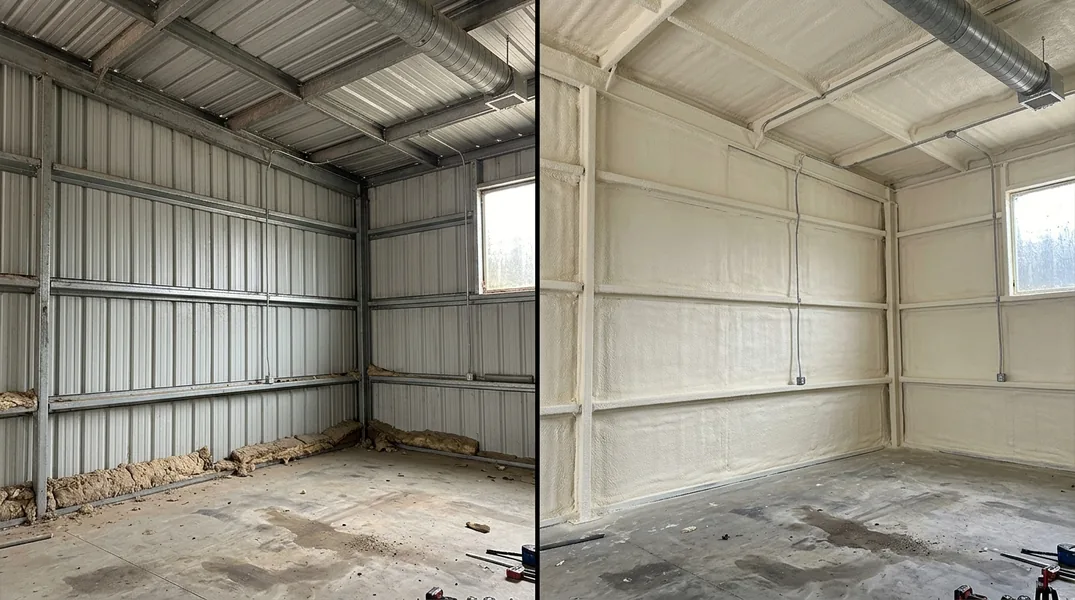
The Belmont Mid-Century Ranch Challenge
Belmont's charming mid-century ranch homes have character, history, and a certain nostalgic appeal that newer construction simply cannot replicate. However, these 1950s and 1960s-era homes often come with a significant thermal liability: attics that were insulated with materials and methods that no longer meet modern energy standards. If you own one of these properties in Pueblo, you've likely noticed higher-than-expected heating and cooling bills, uneven temperatures between rooms, or moisture issues during seasonal changes.
The original insulation in these homes, whether fiberglass batts, mineral wool, or cellulose, has often settled, compressed, or deteriorated over the decades. Gaps have formed around ductwork, electrical penetrations, and roof rafters. These thermal bridges allow conditioned air to escape and outside air to infiltrate, forcing your HVAC system to work harder than it should. Simply adding more of the same old insulation type won't solve the underlying problem because it won't seal the air leaks that are the real culprits behind your energy losses.
Spray Foam vs Blown-In Insulation: Why Sealing Matters
When comparing spray foam vs blown in insulation, the most critical difference isn't R-value alone, it's air sealing capability. Blown-in cellulose or fiberglass insulation, while affordable and easy to install, leaves countless small gaps and voids. These materials settle over time, creating air pockets that reduce their effectiveness. Blown-in products are excellent at resisting heat transfer through conduction, but they do nothing to stop air infiltration, which accounts for 25 to 40 percent of residential heating and cooling losses in older homes.
Attic Spray Foam Insulation works differently. As it's applied, the foam expands and hardens, creating an air-tight seal around every rafter, joist, pipe, and electrical outlet. This dual action, insulation plus air sealing, is why spray foam delivers superior energy performance in attics. For Belmont homeowners, this means your HVAC system doesn't have to compensate for air leaks, your heating and cooling cycles are shorter, and your monthly energy bills drop noticeably.
Spray Foam vs Fiberglass: Durability and Moisture Control
The comparison between spray foam vs fiberglass extends beyond initial installation. Fiberglass batts, the pink or yellow rolls you've probably seen in attics, absorb moisture readily. In Pueblo's semi-arid climate, this might seem less of a concern than in humid regions, but attics are prone to condensation during temperature swings, especially in poorly ventilated spaces. When fiberglass absorbs moisture, its R-value drops, it becomes a breeding ground for mold and mildew, and it can eventually sag and lose contact with the roof deck entirely.
Closed Cell Spray Foam Insulation is hydrophobic, meaning it repels water. This property makes it ideal for attics where moisture control is essential. The closed cell structure also provides superior structural support, actually adding rigidity to your roof assembly. Additionally, spray foam doesn't settle, compress, or degrade over time the way fiberglass does. A properly installed spray foam attic will maintain its R-value and air-sealing properties for decades, making it a genuine long-term investment in your home's comfort and efficiency.
Spray Foam vs Cellulose: Performance in Colorado's Climate
Homeowners often ask about spray foam vs cellulose insulation, especially when they've heard cellulose is eco-friendly or cost-effective. Cellulose, made from recycled paper, does have environmental appeal and a lower upfront cost than spray foam. However, cellulose shares the same fundamental weakness as fiberglass: it doesn't seal air leaks, and it's highly susceptible to moisture absorption. In Colorado's variable climate, where attic temperatures can swing 50 degrees or more between day and night, cellulose is prone to settling and compression, particularly in attics with any vibration from HVAC equipment or foot traffic.
Cellulose also requires chemical fire retardants and pesticides to meet building codes, which may concern some homeowners. Spray foam, by contrast, is inert once cured and doesn't require additional chemical treatments. For the best insulation for attic applications in Pueblo, especially in older homes where air sealing is critical, spray foam delivers measurably better performance than cellulose over the long term. The slightly higher upfront cost is offset by energy savings and the absence of future settlement or moisture-related repairs.
Best Insulation for Attic: Why Your Belmont Home Deserves Spray Foam
When evaluating the best insulation for attic retrofits, you must consider three factors: thermal resistance, air sealing, and durability. Spray foam excels in all three categories. The best insulation for attic applications is one that creates a continuous, uninterrupted thermal and air barrier across the entire attic envelope. This is especially important in mid-century homes where roof designs, rafter spacing, and penetrations are often irregular and difficult to insulate with traditional batts or blown-in products.
Open Cell Spray Foam Insulation is ideal for attics where vapor permeability is desired, while Closed Cell Spray Foam Insulation provides maximum R-value in a thinner profile and superior moisture resistance. Both types eliminate the guesswork and labor-intensive gaps that plague traditional insulation methods. Your attic becomes a truly conditioned space, not a thermal sieve, and your home's comfort improves immediately.
Attic Spray Foam Insulation Cost in Pueblo: What to Budget
Spray foam does cost more upfront than blown-in insulation or fiberglass batts. However, when you factor in energy savings, durability, and the elimination of future re-insulation work, the cost per year of service is often lower than traditional materials. Pricing for attic spray foam depends on your attic's square footage, existing insulation removal requirements, and accessibility. A typical mid-size attic retrofit in Pueblo ranges from moderate to premium investment, but the payback period through reduced energy bills is typically five to seven years.
Many homeowners also qualify for energy efficiency rebates or tax credits that reduce their out-of-pocket cost. Pueblo Spray Foam Insulation can discuss your specific situation and help you understand the true financial picture. Rather than comparing spray foam to the cheapest blown-in option, compare it to the total cost of ownership, including energy bills, maintenance, and longevity. When viewed this way, spray foam is the economically sound choice for serious homeowners. Contact us at (719) 467-2790 or request a free estimate to see exact pricing for your Belmont home.
Next Steps: Professional Attic Spray Foam Insulation Near Me
If you're ready to move beyond temporary fixes and energy inefficiency, professional spray foam installation is the answer. Your Belmont mid-century ranch deserves insulation that works as hard as you do to maintain comfort and control costs. Pueblo Spray Foam Insulation has the expertise to assess your attic's current condition, identify air leaks and thermal weak points, and design a spray foam solution tailored to your home's unique layout and your family's comfort goals.
Don't let another heating season pass with high bills and uneven temperatures. Call Pueblo Spray Foam Insulation today at (719) 467-2790 or visit our website to request a free estimate. We serve all of Pueblo and the surrounding areas, and we're ready to help your home perform like it should.
Looking for a professional spray foam insulation contractor in Pueblo? Pueblo Spray Foam Insulation responds fast for all your spray foam insulation needs.
Get a Free Quote